
7 Technology Investments Financial Advisors Should Make Before 2026 (And Their Expected ROI)

Compare the top portfolio risk management software for RIAs and wealth managers. See features and which tools best fit your practice for monitoring client portfolio risk in real-time.
Cameron Howe
Author

Portfolio risk software has become non-negotiable for financial advisors in 2025. With increasing regulatory scrutiny around Reg BI compliance, volatile markets, and clients demanding more transparency than ever, advisors need robust portfolio risk management tools that go beyond basic Monte Carlo simulations.
But here's the problem: most advisors are still using fragmented tools—one for risk tolerance questionnaires, another for portfolio analytics, a third for compliance documentation. This creates blind spots, wastes hours on manual work, and leaves you vulnerable to compliance gaps.
This guide breaks down the leading portfolio risk software solutions to help you find the right fit for your practice. Whether you're a solo RIA or managing a multi-advisor firm, you'll see how the top platforms compare on features, integrations, and real-world use cases.
Before diving into the comparison, here are the critical capabilities that separate best-in-class portfolio risk tools from legacy solutions:
Investipal stands apart by combining portfolio risk analysis with proposal generation and compliance documentation in a single platform. Instead of toggling between tools, advisors get a unified workflow from client intake to compliant recommendations.
Key Portfolio Risk Features:

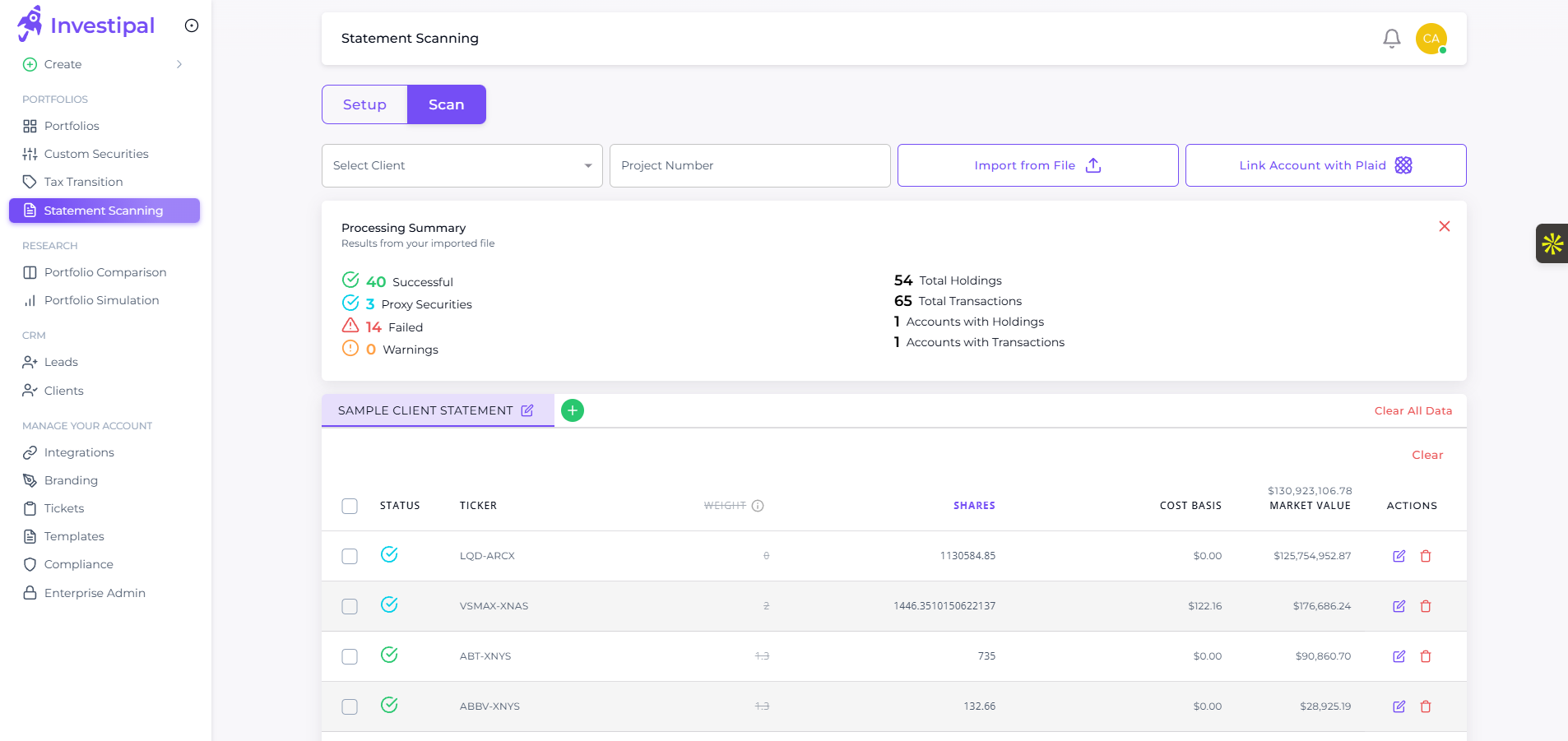
Best For: RIAs and advisors who want portfolio risk analysis that flows directly into proposals and compliance docs—eliminating manual handoffs and reducing onboarding time from days to minutes.
Book a demo to see risk automation in action.
Nitrogen pioneered the "Risk Number" concept—a 1-99 score that quantifies client risk tolerance and portfolio risk alignment. The platform provides a portfolio-wide Risk Number and 95% Historical Range to help advisors make investment decisions and demonstrate alignment to prospects and clients.
Key Features:
Limitations: Nitrogen focuses primarily on risk tolerance and alignment. The platform has expanded into a broader "Growth Platform" offering that includes lead generation and client engagement tools.
Best For: Advisors who primarily need risk tolerance questionnaires and risk number communication with clients.
YCharts combines institutional-grade investment research with portfolio risk analytics. The platform offers comprehensive fundamental and technical data alongside portfolio analysis tools, making it strong for advisors who want deep security-level research.
Key Features:
Limitations: YCharts excels at research and analytics but doesn't include compliance documentation, proposal generation, or onboarding automation. It's a point solution that requires integration with other tools.
Best For: Research-focused advisors who want deep security-level analysis and are comfortable building their own workflows.
HiddenLevers specializes in scenario analysis and stress testing. The platform enables advisors to test portfolios, households, or accounts against various economic scenarios interactively—from interest rate shocks to geopolitical events.
Key Features:
Limitations: Focused specifically on stress testing and scenario analysis. May require additional tools for comprehensive compliance documentation or proposal generation.
Best For: Advisors who want to demonstrate portfolio resilience during client reviews and need sophisticated scenario modeling capabilities.
Orion Risk Intelligence combines business intelligence, risk analytics, and economic research to guide clients toward investment recommendations. It integrates tightly with Orion's portfolio management platform, offering customized portfolio recommendations and stress testing scenarios.
Key Features:
Limitations: Best suited for firms already in the Orion ecosystem. Standalone functionality may be limited compared to purpose-built risk platforms.
Best For: RIAs already using Orion who want integrated risk tools without adding another vendor.
Kwanti delivers a complete portfolio analytics platform for model construction, portfolio reviews, and proposal generation. Trusted by thousands of advisors daily, it combines powerful analytics with an elegant user interface.
Key Features:
Limitations: Primarily analytics-focused. May require additional tools for statement scanning or held-away account integration.
Best For: Advisors who need solid portfolio analytics with an intuitive interface for model construction and client presentations.
Addepar is built for complex wealth—family offices, UHNW clients, and advisors managing illiquid alternatives alongside traditional portfolios. The platform handles asset classes and reporting complexity that most tools can't accommodate.
Key Features:
Limitations: Enterprise-focused platform with significant implementation requirements. May be more than needed for advisors without significant alternative asset exposure.
Best For: Family offices and RIAs managing complex, multi-generational portfolios with significant alternative investments.
Interactive Brokers includes PortfolioAnalyst for clients. It provides risk analytics and reporting for portfolios held at IB, plus the ability to link external accounts for a consolidated view.
Key Features:
Limitations: Basic compared to purpose-built advisor tools. No compliance documentation, limited client reporting features, and no proposal generation.
Best For: Advisors who custody at Interactive Brokers and want risk analytics included with their custody relationship.
Aladdin Wealth brings BlackRock's institutional risk management technology to the wealth management space. It leverages the same risk models used by the world's largest asset managers.
Key Features:
Limitations: Designed for large enterprises, not independent RIAs. Implementation requires significant resources and dedicated technology teams.
Best For: Large broker-dealers, banks, and enterprise wealth management firms.
| Platform | Best For | Held-Away | Compliance Docs | Proposal Generation |
|---|---|---|---|---|
| Investipal | End-to-end automation | ✅ Brokerage accounts | ✅ IPS, Reg BI | ✅ |
| Nitrogen | Risk Number scoring | Limited | Partial | Limited |
| YCharts | Research + analytics | ❌ | ❌ | Limited |
| HiddenLevers | Stress testing | Limited | ❌ | ❌ |
| Orion Risk Intelligence | Orion users | Via Orion | Partial | ✅ |
| Kwanti | Accessible analytics | ❌ | ❌ | ✅ |
| Addepar | UHNW/alternatives | ✅ Full | Partial | Limited |
| IB PortfolioAnalyst | IB custody clients | ✅ Account linking | ❌ | ❌ |
| Aladdin Wealth | Enterprise | ✅ Full | ✅ | ✅ |
The trend in 2025 is clear: advisors are moving away from point solutions toward integrated platforms that combine portfolio risk analysis with proposal generation, compliance documentation, and client reporting.
Here's why the shift is happening:
When your risk tolerance questionnaire lives in one tool, portfolio analytics in another, and compliance documentation in a third, data falls through the cracks. Inconsistencies between systems create exactly the kind of gaps that regulators flag during audits.
Every time you export data from one system to import into another, you're adding manual work and error potential. Advisors report spending 3-5 hours per client on data wrangling that integrated platforms eliminate entirely.
You can't set up meaningful drift alerts or concentration warnings if client assets are scattered across disconnected systems. Platforms that consolidate portfolio data provide the complete picture needed for proactive risk management.
Today's clients compare their advisory experience to fintech apps. They expect real-time portfolio visibility, clear risk communication, and fast onboarding—not multi-week processes that require faxing statements.
Consider these factors when evaluating options:
If you're evaluating portfolio risk management tools, start by mapping your current workflow:
The right portfolio risk software doesn't just analyze risk—it transforms your entire client workflow. From the first prospect meeting through ongoing monitoring and compliance, integrated platforms eliminate the friction that slows down your practice.
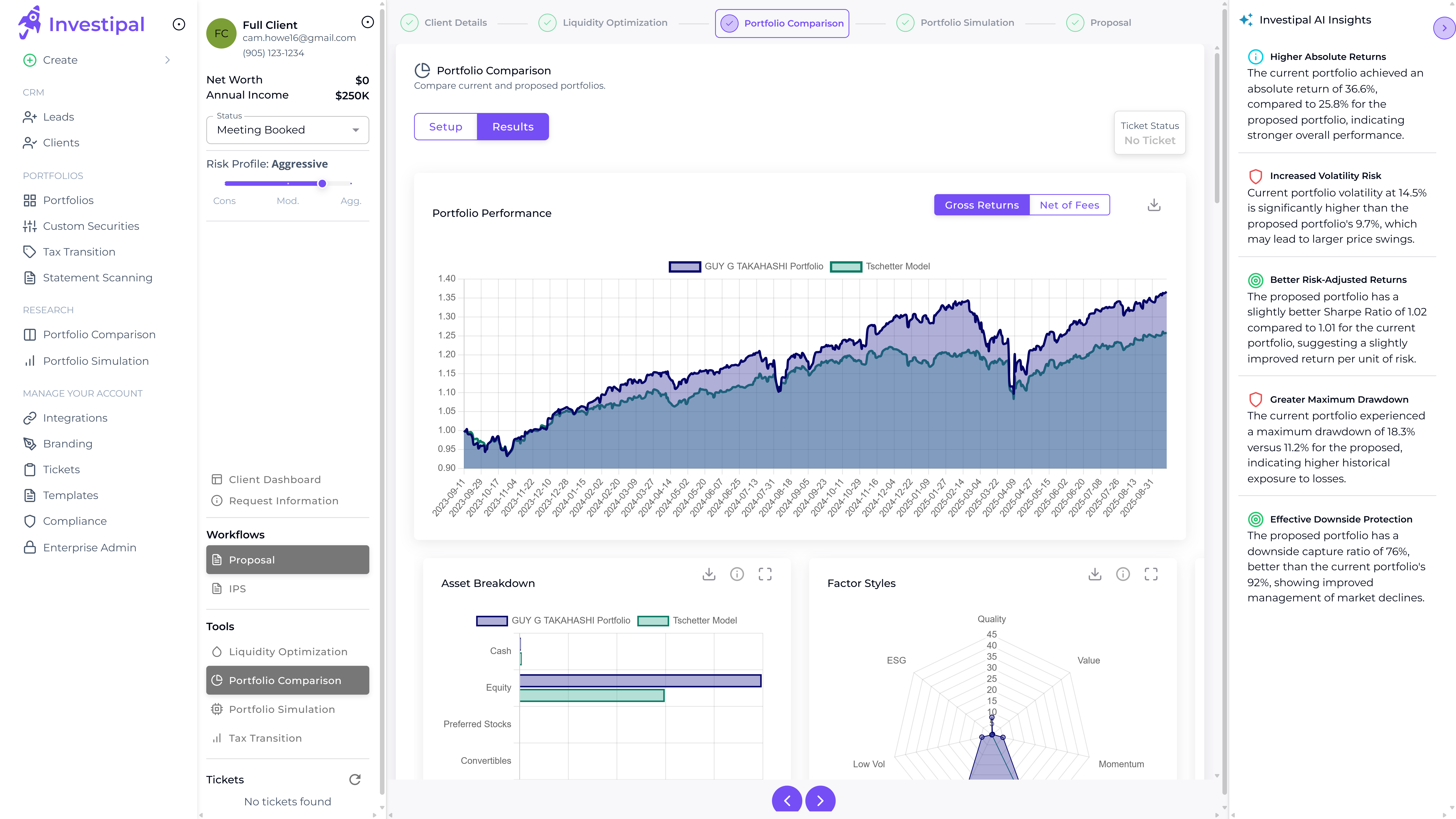
Investipal combines AI-powered portfolio risk analysis with statement scanning, proposal generation, and compliance documentation in one platform. Advisors using Investipal report:
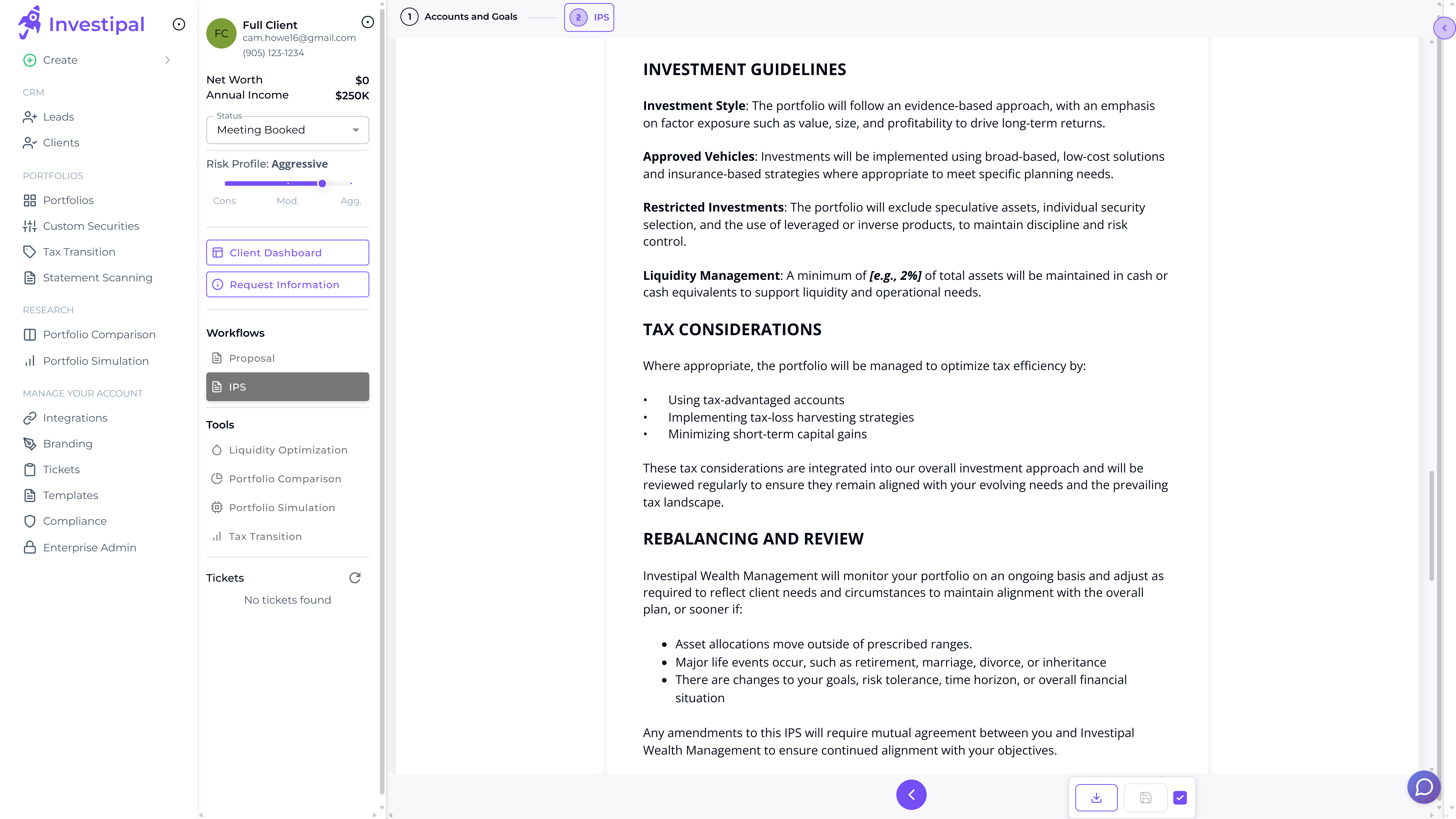
Ready to see how modern portfolio risk software can transform your practice? Book a personalized demo and we'll show you exactly how Investipal handles portfolio risk analysis for advisors like you—from prospect to proposal to ongoing monitoring.

Learn more about Investipal's explainable AI platform and discover how we're helping advisors deliver better outcomes for their clients.
Schedule a Demo Cameron Howe is an ex-quant and research analyst now turned fintech founder helping financial advisors grow their business by automating the delivery of highly personalized proposals and portfolios.

.png)

Curious how Investipal can help accelerate your firm's growth? Chat with one of our solution experts.
Schedule a Demo